The Best Shopify Cross Selling Strategies for Your Store in 2025
Discover effective cross-selling strategies for Shopify that can boost your revenue with minimal effort. Read the article today!

Shipping, Tracking & Notifications
Boost customer experience and reduce support tickets
Realtime order and shipment tracking
Proactive order and shipping notifications
AI-Enhanced Discounted Labels
Predictive pre-purchase estimated delivery dates
Self-Serivce branded order tracking
Effortless experience delivered
Identify and Resolve Order Issues
Realtime order and shipment tracking
Make returns profitable and delight customers
Flexibility to define any return destinations & conditions
Simplify returns for your customers and team
Incentivize exchanges over returns
Returns management made easy for your team
Returns management made easy for your team
Easy claims and smart upsells
Understand why your customers are returning
In-Store & Curbside Pickup
Unify the online and the in-store experience
Hassle-free pickup experience for customers
In-Store dashboard to keep operations streamlined
In-Store and Online orders unified
Drive foot-traffic to your stores
Shipping, Tracking & Notifications
Boost customer experience and reduce support tickets
Realtime order and shipment tracking
Proactive order and shipping notifications
AI-Enhanced Discounted Labels
Predictive pre-purchase estimated delivery dates
Self-Serivce branded order tracking
Effortless experience delivered
Identify and Resolve Order Issues
Realtime order and shipment tracking
Make returns profitable and delight customers
Flexibility to define any return destinations & conditions
Simplify returns for your customers and team
Incentivize exchanges over returns
Returns management made easy for your team
Returns management made easy for your team
Understand why your customers are returning
In-Store & Curbside Pickup
Unify the online and the in-store experience
Hassle-free pickup experience for customers
In-Store Dashboard to keep operations streamlined
In-Store and Online orders unified
Drive foot-traffic to your stores
Boost customer experience and reduce support tickets
Realtime order and shipment tracking
Proactive order and shipping notifications
AI-Enhanced Discounted Labels
Predictive pre-purchase estimated delivery dates
Self-Serivce branded order tracking
Effortless experience delivered
Make returns profitable and delight customers
Flexibility to define any return destinations & conditions
Simplify returns for your customers and team
Incentivize exchanges over returns
Returns management made easy for your team
Equip your team for precise return checks.
Easy claims and smart upsells
Understand why your customers are returning
Unify the online and the in-store experience
Hassle-free pickup experience for customers
In-Store Dashboard to keep operations streamlined
In-Store and Online orders unified
Drive foot-traffic to your stores
Find the answer to all your questions
Take a step by step trip through our functionality to see how we can improve your ecommerce processes.
Explore the most comon questions about WeSupply
Calculate the ROI that WeSupply can bring you
Read actionable articles on how to optimize your post-purchase experience and decrease support tickets
Get inspired by stories of how our customers implemented an effortless post-purchase experience
Wondering if WeSupply is a good fit for you? Read through our use cases to see how we can help you increase conversion & improve CX!
A Deep Dive into Top Companies' Order Tracking & Returns Strategy
Find the answer to all your questions
Explore the most comon questions about WeSupply
Calculate the ROI that WeSupply can bring you
Request a no strings attached review of your current shopping experience and missed conversion opportunities
Take a step by step trip through our functionality to see how we can improve your ecommerce processes.
Read actionable articles on how to optimize your post-purchase experience and decrease support tickets
Get inspired by stories of how our customers implemented an effortless post-purchase experience
A Deep Dive into Top Companies' Order Tracking & Returns Strategy
Wondering if WeSupply is a good fit for you? Read through our use cases to see how we can help you increase conversion & improve CX!

If you look around the retail world online or in stores you’ll notice something curious: almost everyone offers a 30-day return policy. Clothing brands, electronics stores, and even software companies seem to follow the same rule. It feels like an industry law, but it isn’t. The 30-day window became popular mainly because it was easy to copy, not because it was proven to be the best.
In the early days of ecommerce, small businesses often borrowed policy templates from bigger brands. That 30-day window spread like a rumor no one questioned it because it seemed safe and familiar. Over time, it turned into the “standard” that everyone followed.
But standards can be deceiving. What works for one brand might not work for another. A small handmade jewelry shop doesn’t face the same challenges as a large fashion retailer or electronics company. The truth is, the right return policy is a strategic decision, not a number you borrow from someone else.
Recent data from Loop Returns, which has processed millions of returns, shows that 80% of returns happen within the first 14 days. This means most customers decide quickly whether they’ll keep or send something back. So if nearly everyone returns within two weeks, why are we still using a 30-day policy? The answer lies in perception and psychology, not just practicality and that’s what we’ll explore next.
A return policy isn’t just about taking products back it’s about building trust. When a customer sees a clear, fair return process, it sends a powerful message: “We believe in our products, and we care about your experience.” That feeling of security often turns a first-time buyer into a repeat customer.
A transparent return policy reduces hesitation at checkout. Many shoppers say they read the return policy before buying especially for higher-priced items. In fact, a study by PowerReviews found that over 70% of online shoppers check return options before completing a purchase. This means your return policy doesn’t just protect your brand; it helps you close sales.
It’s also about reputation. Brands known for smooth returns like Zappos or Patagonia are often remembered for customer care rather than the return itself. Their policies are easy to find, simple to understand, and consistent. Customers know exactly what to expect.
There’s also a legal and operational side. Some regions require clear return or refund policies under consumer protection laws. Having one helps you stay compliant and prevent misunderstandings. Internally, it also helps your customer service team work faster and more confidently.
In short, a return policy isn’t a piece of fine print it’s part of your customer experience. When done right, it reduces confusion, saves time, and strengthens your brand’s credibility.
Why do customers care so much about return windows? It’s not only about getting their money back it’s about feeling safe when they make a purchase. Psychologists call this the “safety net effect.” When people know they can return something, they’re more comfortable buying it in the first place.
Interestingly, longer return windows can actually lead to fewer returns. A study from the University of Texas found that when customers are given more time to return an item, they become less likely to do so. Why? Because they feel less pressure and grow more attached to the product over time. Short deadlines create urgency, while generous windows create comfort.
That’s why some brands especially those that prioritize loyalty offer return windows of 60 days, 90 days, or even a full year. These policies may sound risky, but they often pay off. Customers perceive them as a sign of confidence and fairness, which can increase conversion rates and word-of-mouth trust.
On the other hand, too much flexibility can cause problems if it’s not managed properly. If the process is unclear or overly lenient, it can invite abuse like “wardrobing” (wearing an item once and returning it.
The key insight here is that return windows are about psychology as much as logistics. The right policy makes your customers feel respected and safe, which leads to stronger relationships and higher lifetime value.
While a 30-day return policy can make customers happy, it also comes with real costs. Every return triggers a chain of events inspection, restocking, cleaning, and sometimes repackaging. These steps take time, labor, and money.
According to the National Retail Federation, U.S. retailers lost over $743 billion in 2023 to returns, and about 13% of those returns were fraudulent or abusive. That’s not just a small dent it’s a major business challenge. For ecommerce brands, reverse logistics (the process of moving returned goods back through the supply chain) can cost up to 60% of the original sale price.
A 30-day window also affects inventory health. Products that come back after several weeks often miss their resale window, especially in fast-moving industries like fashion or electronics. Seasonal items may lose relevance or value by the time they’re returned.
There’s also an environmental cost. Shipping returns adds to carbon emissions, packaging waste, and disposal issues. Many returned items can’t be resold as new and end up in landfills.
So while a generous return policy can help sales, it can also hurt profitability if it’s not balanced. The solution isn’t to eliminate returns it’s to design smarter systems that reduce unnecessary ones. That includes clearer product descriptions, better sizing guides, quality checks, and technology that helps customers make the right choice before they buy.
Understanding the hidden costs allows brands to make informed decisions. A 30-day policy might still make sense but it should be supported by strong logistics and clear communication.
Not all products or customers are the same. That’s why a “one size fits all” return policy rarely works well. The ideal return window depends on what you sell, who you sell to, and where you sell it.
For example, apparel brands often benefit from more flexible return policies because sizing and fit vary widely. Customers may need time to try things on and exchange them. On the other hand, electronics or software companies face higher risks of fraud or misuse, so they often set shorter or more conditional windows.
International sales add another layer. Customs fees, longer shipping times, and higher costs make global returns more complex. Many global brands now offer extended windows (45–60 days) for international customers to account for shipping delays.
It’s also smart to consider your sales channels. A brick-and-mortar customer can easily return in person, but an online buyer faces more friction. Some omnichannel retailers now allow in-store returns for online purchases, blending convenience with cost savings.
The best return policies evolve from understanding your customer base. Analyze your data: when do customers actually initiate returns? Which products get returned most? Where are the biggest bottlenecks? These insights will tell you more than any “industry standard” ever could.
In short, your return policy should reflect your brand’s reality. A luxury watchmaker doesn’t need the same return window as a casual fashion label. Flexibility and strategy not imitation create the best results.
The future of returns isn’t about shorter or longer windows it’s about smarter ones. Many forward-thinking brands are adopting tiered or dynamic return policies that adapt to customer behavior.
In a tiered policy, you offer different timeframes depending on the return type. For instance, a brand might allow 14 days for refunds, 30 days for exchanges, and 60 days for store credit. This approach rewards loyal customers while protecting your margins. Most shoppers who intend to return for a refund will do so quickly anyway, while giving others more time encourages continued engagement.
Some brands are even experimenting with dynamic return windows that adjust based on a customer’s history. A frequent buyer with a clean return record might automatically get a longer window or free shipping, while a new or high-risk customer might see stricter terms. This personalization, made possible by AI and CRM tools, builds trust while minimizing loss.
Tiered systems also allow you to use your return policy as a marketing tool. Promoting “extended exchange periods” or “lifetime store credit” can increase confidence and loyalty. Customers see it as generosity, even if the backend terms are designed to favor sustainable business outcomes.
Most importantly, these smarter approaches help align your returns with your business goals. You’re no longer just reacting to returns you’re managing them strategically.
When done well, a dynamic return policy becomes an asset, not a liability. It’s proof that your brand understands both people and profit.
Smarter alternatives: tiered and dynamic return policies
Book a quick call to see how WeSupply helps you create flexible, data-driven return policies that boost loyalty and protect your margins.
Combat inconvenience with proactivity & self service
Book a quick call with our experts to see how WeSupply can help you make returns easy for your customers with a beautiful, self-service solution that makes their experience easier while also providing new ways to lower costs and earn back revenue.
So, is a 30-day return policy right for your brand? The answer isn’t a simple yes or no. It depends on what you sell, who your customers are, and how your business operates. But you can make that decision confidently by following a data-driven framework.
Start by reviewing your customer behavior. When do most returns happen? If over 80% occur in the first two weeks, a shorter window might save you costs without hurting customer trust. If customers often buy as gifts or for seasonal needs, a longer window could reduce friction and improve satisfaction.
Next, assess your operational capacity. Can your logistics and customer service teams handle the return volume efficiently? Do you have systems in place to track, process, and restock items quickly? If not, a 30-day window could stretch your resources too thin.
Then, evaluate your competitive landscape. What are your peers offering? Matching the industry standard helps maintain customer confidence, but you can still stand out by offering better communication or incentives like free exchanges.
You should also model the financial impact. Estimate the cost per return, including shipping, handling, restocking, and potential resale loss. Balance that against the potential increase in sales and conversion from offering a more flexible policy.
Finally, test and adapt. Policies shouldn’t be static. Run A/B tests offer different return windows to segments of your audience and track how it affects conversion, satisfaction, and profitability. Use real data, not guesswork, to find your sweet spot.
Remember: the goal isn’t to copy anyone else’s policy it’s to design one that fits your brand’s values, capabilities, and customers.
Let’s be honest, “30 days to return” sounds easy, but when does that timer actually start? The day they ordered? The day it shipped? The day it arrived? That tiny bit of confusion can cause big headaches for both your team and your customers.
That’s where WeSupply steps in. We make return policies crystal clear, flexible, and built around your brand’s real-world needs.
✅ Return Window by Order Date – Count from the moment the order is placed.
✅ Return Window by Fulfillment Date – Start the clock when your team ships the product.
✅ Return Window by Delivery Date – Base it on when the customer actually receives their item.
✅ Holiday-Specific Return Windows – Offer extra time during the holiday rush—no stress, no rush.
✅ Product-Specific Return Rules – Adjust return windows by SKU, product type, or tag for complete control.
During holidays, people shop early and gift later. WeSupply helps you extend your return window so customers feel confident buying ahead of time without worrying about missing that 30-day mark.
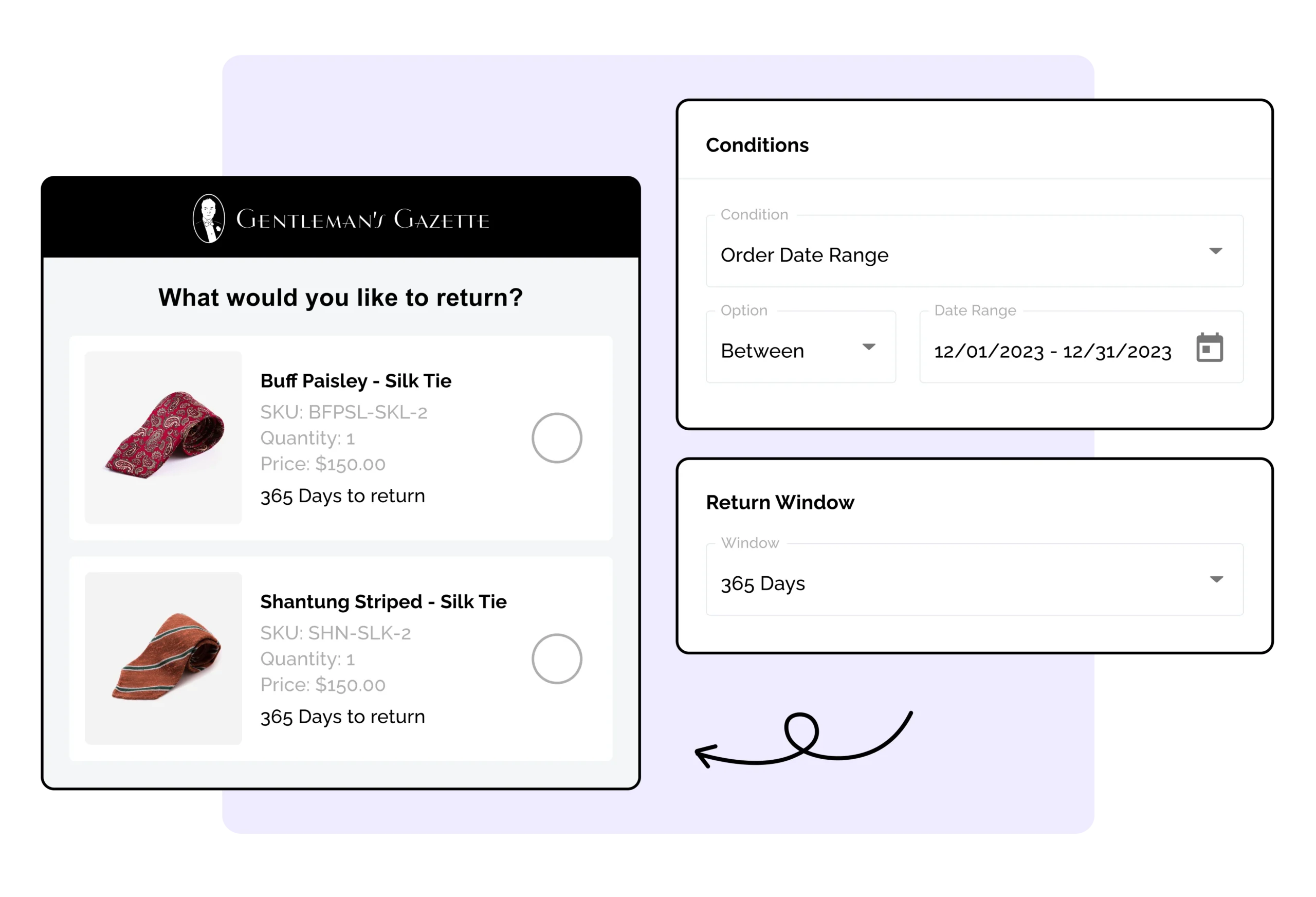
If you carry multiple brands or vendors, you can tailor each return window to match their unique needs. That means less confusion and better consistency for everyone involved.

Sometimes, customers just need a little more time. With WeSupply, you can still allow exchanges after the return window expires keeping customers happy and loyal without adding chaos to your system.
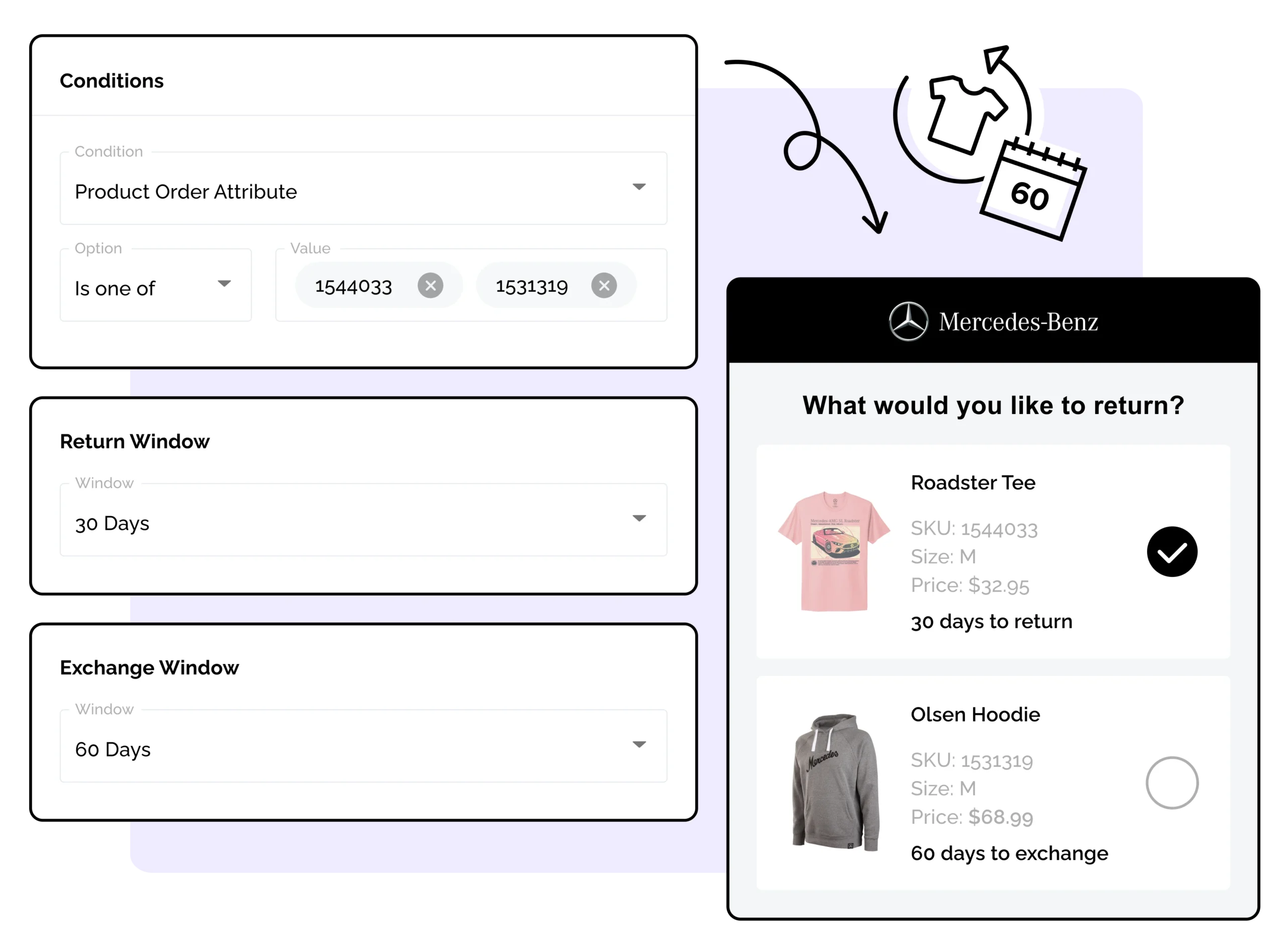
A return policy isn’t just a rule, it’s a reflection of your brand’s trust and flexibility.
WeSupply helps you:
Reduce unnecessary returns caused by confusion.
Improve customer satisfaction and loyalty.
Stay agile with clear, automated, and customizable return settings.
In short: WeSupply turns the question “Is a 30-day return policy right for us?” into a smarter answer, “What return policy is right for our customers?”
👉 Ready to see how simple smart returns can be? Book a demo with WeSupply today!
A 30-day return policy sounds simple and familiar but simplicity isn’t always what serves your brand best. The real question isn’t how long returns should last, but how clear and flexible your policy can be. That’s where WeSupply helps you take control. With customizable options like counting return windows by order, fulfillment, or delivery date, creating holiday-specific policies, or setting unique timelines by product type or brand, you eliminate confusion and make returns feel effortless for everyone. You can even extend holiday return windows or allow exchanges after the standard window to keep customers happy and loyal.
A great return policy builds trust, not tension. By using WeSupply’s automation and flexibility, you make every step from checkout to return transparent, consistent, and customer-first.
Because in the end, your return policy isn’t about returns it’s about relationships. WeSupply helps you design a return experience that fits your brand, supports your operations, and keeps customers coming back.
1. Why do most brands use a 30-day return policy?
Because it became an industry habit, not a proven standard. The 30-day window spread by imitation, not data. Most returns actually occur within 14 days.
2. Is a shorter return window better for business?
Often yes. Since 80% of returns happen within two weeks, shorter windows can reduce costs and inventory loss without hurting customer trust.
3. How does a return policy influence customer trust?
A transparent, fair policy signals confidence and care. Customers feel safer buying, boosting conversions and long-term loyalty.
4. How does WeSupply help brands customize return policies?
WeSupply lets you set dynamic return windows by order date, fulfillment date, or delivery date tailored for your operations and customer expectations.
5. Can WeSupply manage product-specific or brand-specific returns?
Yes. You can assign different return timelines or rules for each SKU, product type, or vendor to match real-world business needs.
6. Does WeSupply support extended or post-window exchanges?
Absolutely. You can offer extended holiday windows or even allow exchanges after the return window to maintain customer satisfaction and loyalty.
7. Does WeSupply have an Official Shopify App?
Yes. WeSupply has an Official Shopify App. You can download it and start integrating with your Shopify Store.
8. Does WeSupply have an official Magento extension?
Yes, WeSupply has an official extension for Magento. The WeSupply x Magento integration allows for automating order tracking experiences, reducing customer inquiries, automating shipping email and SMS notifications, and providing a fully branded order tracking experience
9. Does WeSupply have an official BigCommerce App?
Yes, WeSupply has an official BigCommerce App. You can integrate WeSupply with your BigCommerce store to improve your post-purchase customer experience.
Learn How To Create Successful Post Purchase Email Campaigns
Build an effective post-purchase email flow that helps you increase customer satisfaction and drive revenue growth!
Discover effective cross-selling strategies for Shopify that can boost your revenue with minimal effort. Read the article today!

Discover how an effective order management system can streamline processes, reduce errors, and boost customer satisfaction.

Discover how to choose the right Transportation Management System for your business needs. Streamline operations and enhance efficiency.
Boost your sales this peak season with effective strategies for personalized shopping. Practical tips to enhance customer engagement!

Discover effective post-purchase engagement strategies to enhance customer loyalty and keep your audience coming back.
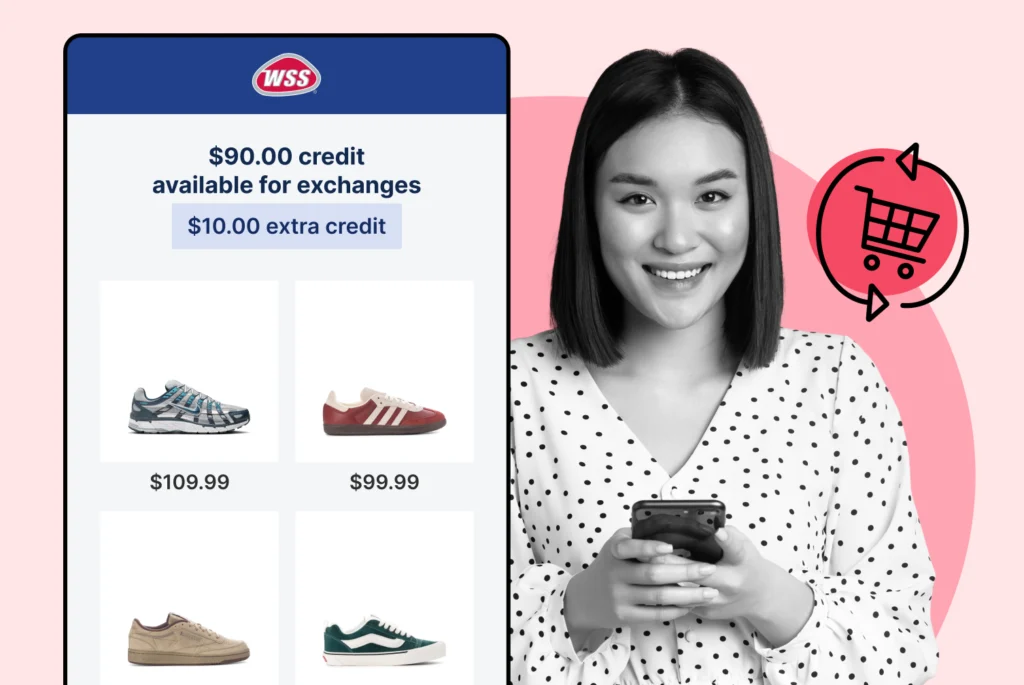
Discover key insights into ecommerce post-purchase behavior to enhance customer loyalty. Read the article for effective strategies!
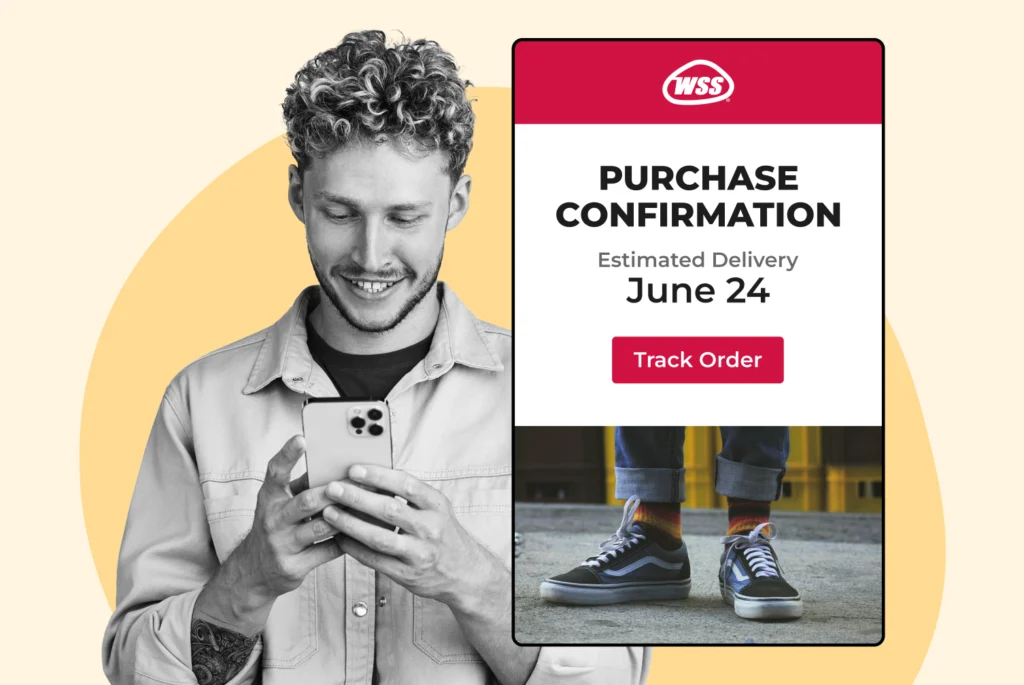
Learn how delivery date transparency can boost conversions during peak season. Discover tips to enhance customer trust and drive sales.

Enhance delivery efficiency with proven strategies to optimize real-time ETAs. Discover actionable tips for accuracy and reliability.

Navigate Black Friday returns with ease! Discover practical tips for hassle-free exchanges and make your post-shopping experience stress-free.