
Personalized Shopping: Stand Out This Year’s Peak Season
Boost your sales this peak season with effective strategies for personalized shopping. Practical tips to enhance customer engagement!
Shipping, Tracking & Notifications
Boost customer experience and reduce support tickets
Realtime order and shipment tracking
Proactive order and shipping notifications
AI-Enhanced Discounted Labels
Predictive pre-purchase estimated delivery dates
Self-Serivce branded order tracking
Effortless experience delivered
Identify and Resolve Order Issues
Realtime order and shipment tracking
Make returns profitable and delight customers
Flexibility to define any return destinations & conditions
Simplify returns for your customers and team
Incentivize exchanges over returns
Returns management made easy for your team
Returns management made easy for your team
Easy claims and smart upsells
Understand why your customers are returning
In-Store & Curbside Pickup
Unify the online and the in-store experience
Hassle-free pickup experience for customers
In-Store dashboard to keep operations streamlined
In-Store and Online orders unified
Drive foot-traffic to your stores
Shipping, Tracking & Notifications
Boost customer experience and reduce support tickets
Realtime order and shipment tracking
Proactive order and shipping notifications
AI-Enhanced Discounted Labels
Predictive pre-purchase estimated delivery dates
Self-Serivce branded order tracking
Effortless experience delivered
Identify and Resolve Order Issues
Realtime order and shipment tracking
Make returns profitable and delight customers
Flexibility to define any return destinations & conditions
Simplify returns for your customers and team
Incentivize exchanges over returns
Returns management made easy for your team
Returns management made easy for your team
Understand why your customers are returning
In-Store & Curbside Pickup
Unify the online and the in-store experience
Hassle-free pickup experience for customers
In-Store Dashboard to keep operations streamlined
In-Store and Online orders unified
Drive foot-traffic to your stores
Boost customer experience and reduce support tickets
Realtime order and shipment tracking
Proactive order and shipping notifications
AI-Enhanced Discounted Labels
Predictive pre-purchase estimated delivery dates
Self-Serivce branded order tracking
Effortless experience delivered
Make returns profitable and delight customers
Flexibility to define any return destinations & conditions
Simplify returns for your customers and team
Incentivize exchanges over returns
Returns management made easy for your team
Equip your team for precise return checks.
Easy claims and smart upsells
Understand why your customers are returning
Unify the online and the in-store experience
Hassle-free pickup experience for customers
In-Store Dashboard to keep operations streamlined
In-Store and Online orders unified
Drive foot-traffic to your stores
Find the answer to all your questions
Take a step by step trip through our functionality to see how we can improve your ecommerce processes.
Explore the most comon questions about WeSupply
Calculate the ROI that WeSupply can bring you
Read actionable articles on how to optimize your post-purchase experience and decrease support tickets
Get inspired by stories of how our customers implemented an effortless post-purchase experience
Wondering if WeSupply is a good fit for you? Read through our use cases to see how we can help you increase conversion & improve CX!
A Deep Dive into Top Companies' Order Tracking & Returns Strategy
Find the answer to all your questions
Explore the most comon questions about WeSupply
Calculate the ROI that WeSupply can bring you
Request a no strings attached review of your current shopping experience and missed conversion opportunities
Take a step by step trip through our functionality to see how we can improve your ecommerce processes.
Read actionable articles on how to optimize your post-purchase experience and decrease support tickets
Get inspired by stories of how our customers implemented an effortless post-purchase experience
A Deep Dive into Top Companies' Order Tracking & Returns Strategy
Wondering if WeSupply is a good fit for you? Read through our use cases to see how we can help you increase conversion & improve CX!

Imagine you run a business that sells toys, clothes, food, or any kind of product. You need to move things from where you make them to where people buy them maybe a warehouse, store, or directly to someone’s home. Moving goods isn’t easy: there are many steps, many people, many costs, and many chances for mistakes or delays. A Transportation Management System, or TMS, is a special kind of software that helps with all of that. It makes shipping goods smoother, cheaper, and more reliable.
In this article, we’ll explore in simple terms:
What a TMS really is
How it works
What features it has
Why shippers benefit from using one
How to choose, implement, and measure success with a TMS
By the end, you’ll see why many businesses consider a TMS a smart investment.
In recent years, moving goods from point A to point B has become more complicated. Businesses sell globally, customers expect fast deliveries, regulations change, fuel costs go up, and disruptions (like bad weather or port delays) are common. Because of this, companies that rely only on spreadsheets, phone calls, or manual tracking often struggle to stay efficient and keep costs under control.
A Transportation Management System (TMS) steps in to solve many of those problems. It is software that helps businesses plan, execute, monitor, and optimize the movement of goods. Think of it like a control center for shipping. It helps you decide who carries your goods, which routes to take, keep track of where the goods are, ensure paperwork is correct, and use data to make smarter decisions.
At its core, a TMS is a software platform designed to support the transportation side of supply chain management. It covers everything related to moving goods by road, sea, air, or other means from the moment you plan a shipment until it arrives at its destination, gets paid for, and you audit the costs.
Key points about what a TMS does:
It handles transportation planning: choosing carriers (companies that do the shipping), deciding the best routes, combining shipments so you don’t send half-empty trucks.
It supports transportation execution: booking carriers, sending out orders, generating documents, tracking where things are.
It aids in optimization: using data to improve routes, negotiate better rates, reduce delays, and cut fuel use.
It provides real-time visibility: so you can see where shipments are, if something is delayed, and take action early.
It manages auditing and reporting: checking invoices, ensuring payments are correct, and giving managers information (reports, dashboards) to see how things are going.
A TMS often links with other systems you already have: a Warehouse Management System (WMS), ERP (Enterprise Resource Planning), Order Management, etc. When everything is connected, data flows better, and everything works more smoothly.
To understand why a TMS helps so much, let’s walk through how it typically works from planning to delivery to analysis.
Planning
You have orders, you know what goods you need to ship and where. The TMS helps you compare different carriers (different shipping companies) based on cost, speed, reliability. It estimates routes and chooses the best one, probably combining shipments so you fill trucks better (reducing empty space).
Execution
Once you pick carriers and route, the TMS sends out the shipping orders or tenders automatically. It produces the documents needed (like bills of lading, freight invoices). As shipments move, the TMS tracks them so you and your customers know where things are.
Monitoring & Handling Issues
Because you can see in real time or near real time where shipments are, you can respond to delays maybe reroute, inform customers, make adjustments. For example, if a truck is delayed by traffic or weather, the TMS can alert you.
Auditing & Cost Control
Once shipments are done, the TMS helps check bills against what you expected: Did the carrier charge what they promised? Were there hidden fees? Were all parts of the bill correct? If not, you can catch errors and avoid overpaying.
Reporting & Analytics
Over time, the TMS collects data: delivery times, costs, performance of different carriers, delays, etc. Then you can see trends, see where things can be improved, decide what changes to make.
Because of these steps, what a TMS delivers is not just automation, but smarter control and visibility throughout the transportation flow.
To pick a good TMS, or to understand one you already have, you want to know what features are important. Here are key features that make a TMS powerful:
Carrier & Shipment Management: Keeping track of different carriers (their cost, reliability, capacity). Having a way to compare them and choose the best option.
Route Optimization & Load Building: Making sure you plan shipments so trucks are full, routes are efficient, fuel usage is lower, and shipments arrive on time.
Real-time Visibility / Tracking: Knowing where your shipment is, its status, if there are delays. Getting alerts. Allowing customers to know too.
Freight Billing & Auditing: Automatically checking invoices, comparing what was promised vs. what was billed, spotting mistakes or overcharges.
Analytics & Reporting: Dashboards showing metrics like cost per mile, delivery time, on-time performance, carrier reliability. Seeing trends over time.
Integration: Connecting with other systems like warehouse systems, ERP, order management, so data flows without manual entry.
Scalability & Flexibility: Ability to handle more shipments or more complex routes, more carriers. Also cloud-based options which make it easier to expand.
Compliance & Documentation: Managing paperwork, ensuring the correct regulatory requirements, ensuring safety, ensuring that documentation is correct to avoid fines or delays.
Now, let’s focus on what happens when a shipper (a business that sends goods) uses a good TMS. These are the main benefits and real numbers where available make it clearer how powerful they can be.
One of the biggest reasons businesses get a TMS is to save money. Studies show that using a TMS can reduce transportation costs by about 11% on average. For many companies, this means tens or hundreds of thousands of dollars saved each year, depending on how much shipping they do.
How does this happen? By comparing carrier rates automatically, consolidating shipments so you are not sending half-empty trucks, reducing “empty miles” (driving without useful cargo), reducing fuel usage, and preventing billing errors. One source says companies often save between 5% to 10% of their transportation cost budget.
Another big benefit is doing things faster with less manual work. Instead of humans filling in lots of forms, making phone calls to find the best carrier, sending tracking updates manually, a TMS automates many of these tasks. That means fewer mistakes, less time spent on repetitive tasks, more time for people to solve bigger problems.
For example, when dispatch or booking tasks are automated, labor costs drop. The TMS can automatically send transport orders, update status, etc. Some of these automations can reduce waiting or delay times combined with improved docking times.
With a TMS, you can see what is happening in your shipments almost in real time. If a shipment is stuck in traffic, or if a delay is coming, you know earlier and can respond maybe inform your customer, reroute, or make other changes. This visibility reduces surprises.
Some data: according to a survey, 77% of supply chain decision-makers say real-time visibility is a must-have. But only about 24% report having the tools to really see in real time what is going on. agistix.com Also, many admit they have visibility into less than half their shipments. agistix.com A TMS helps close that gap.
Customers want to know where their orders are, when exactly they’ll arrive, and expect fewer mistakes. When a business uses a TMS, delivery times become more reliable, updates are more accurate, and delays are communicated before they become crises. That improves trust, repeat business, and a good reputation.
For example, companies that improved tracking and notifications through a TMS reported fewer customer complaints, higher satisfaction, and sometimes increased sales because people like businesses that deliver as promised. (While specific overall numbers vary by business, improved delivery times have been reported some as much as a 30% improvement in delivery times in case studies.
Shipping goods has rules: customs, safety regulations, proper documentation, carrier performance. A TMS helps ensure those rules are followed. If documentation is wrong, goods may be delayed, fined, or rejected. If a carrier performance is poor, goods might arrive late or broken.
Because paperwork and auditing are automated, errors go down. Invoices get checked, incorrect charges get flagged. The TMS helps make sure carriers meet standards. This reduces risk and cost of non-compliance.
A TMS doesn’t just help with today’s shipments. It gathers data over time, and this builds knowledge. You see which carriers are best, which routes are fastest, where delays happen most, what times of day or parts of route are tricky. You use that information to plan better, negotiate better, avoid trouble, and react faster.
Predictive analytics (using past data to predict what might happen) is part of modern TMS: it can warn you of bottlenecks, suggest alternate routes, estimate when delays might happen. This helps you reduce risk and make smarter choices.
As your business grows more orders, more locations, wider geography a TMS helps you scale up without falling apart. Cloud-based systems let you add more shipments, carriers, or features without huge new cost. If business slows, you scale down. If new routes or transport modes are needed (sea, air, etc.), a good TMS can accommodate growth.
A shipper doesn’t work alone. The business is part of a supply chain with suppliers, factories, warehouses, carriers, and customers. For the chain to work well, everything needs to fit together.
A TMS plays a critical role in this larger chain. It links with warehouse systems to know when orders are ready, links with inventory systems so shipments don’t get delayed waiting for items, links with order management to know which orders are highest priority. When integration is good, things flow more smoothly.
Also, supply chains need to be resilient: able to handle supply shocks (e.g., natural disasters, labor shortages) or demand spikes (for example, holidays or promotions). When you have real visibility, good planning, and fast reaction (all enabled by a TMS), the supply chain is stronger.
Not all TMS systems are exactly the same. There are different types, levels of complexity, ways of delivering them, and features.
Some are cloud-based: you access them over the internet. They often cost less up front, can scale more easily, and get updates more frequently.
Others are on-premises (installed in your own servers), which might give more control but also more maintenance.
Some TMS providers offer managed services: you get the software plus experts who help run some of the operations. This can help if you don’t have big logistics teams.
Also, there are basic vs. advanced TMS. Basic ones might handle simple shipments, route planning, billing. More advanced ones might support many transport modes, predictive analytics, real-time visibility across many partners, and strong integration with other business systems.
Choose the right TMS for your shipping needs
Book a quick call to see how WeSupply complements your TMS to streamline shipping, boost visibility, and simplify logistics.
If you decide you want a TMS, how do you choose the right one? Here are important things to think about:
Functionality – Does it have the features you need: route optimization, tracking, freight audit, carrier management?
Scalability – Will it grow with your business? If you ship more, or into more countries, or via more modes (air, sea, etc.), can the system adapt?
Ease of Use – How easy is it for your team to learn it, to keep using it? If it’s too hard, you may lose time or make mistakes.
Integration – Can the TMS connect well with your existing systems (WMS, ERP, order system)? If you must keep entering data manually, you lose many benefits.
Cost & Return on Investment (ROI) – What is the total cost (software, setup, training, maintenance)? And what savings or gains do you expect? Based on studies, savings of 5-15% in freight costs are common.
Vendor Reputation & Support – Is the vendor reliable? Do they update the product often? Do they help with implementation, training, dealing with issues?
Even a very good TMS won’t help if it’s not set up and used well. Implementation is key how you bring it into your company, how you connect it to other systems, how you ensure everyone knows how to use it.
Plan carefully. Map out your current processes, know what you want to improve, identify weak spots.
Make sure teams are trained. People using the TMS need to know how to use it, what information is needed, how to respond to alerts, etc.
Integrate with other systems. If your warehouse system, order management, or ERP are not connected, then you’ll miss out on efficiencies and real visibility.
Start with pilot or smaller parts. You might try using the TMS in just one region or for one set of shipments first, fix problems, then expand.
Monitor closely. Look at early KPIs (key performance indicators), adjust settings, correct issues, refine processes.
You might think TMS is only for huge companies. But that’s not true. Smaller and medium businesses benefit too.
Cloud-based TMS systems make it cheaper to start because you don’t need as much hardware or infrastructure. You pay more as you use more (usually). This means lower upfront costs. If your shipping volume grows, the system can grow with you.
Also, SMBs can use managed services (where parts of running logistics are outsourced) so they don’t need big logistics teams. They get many of the benefits (visibility, cost savings, reliability) without having to build everything themselves.
One benefit that often stands out is visibility: knowing where your goods are at all times. Tracking shipments gives peace of mind. If something goes wrong say a road is blocked or a storm slows a ship you see it early. You can contact customers to keep them updated. You can reroute if needed.
Visibility also helps your internal planning. If you know a shipment will be late, you might adjust staffing, shift warehouses, or tell sales you’ll need more time. That helps avoid last-minute surprises.
Because many businesses reported that real-time visibility was one of the features they wanted most, yet many did not have it, getting that visibility with TMS often yields quick wins.

If you’ve ever wondered how companies manage to get thousands of packages to the right doorstep, on time, every time that’s where a Transportation Management System (TMS) comes in.
A TMS helps businesses plan, organize, and track how goods move from one place to another. It’s like a smart map that tells you the best route, which carrier to use, and how much it costs keeping everything on schedule and under control.
But even with a TMS in place, challenges can pop up: delayed shipments, lost packages, rising costs, or frustrated customers asking, “Where is my order?”
That’s where WeSupply steps in making your TMS smarter, faster, and more customer-friendly.
WeSupply isn’t just another tracking tool, it’s your post-purchase command center, built to work hand in hand with your TMS to close the gap between planning shipments and delighting customers.
Here’s how WeSupply helps you handle what a TMS alone can’t:
Stay in control of every shipment, every moment.
Track orders and deliveries across 1,000+ carriers (parcel, LTL, or same-day).
Instantly spot delays or stalled shipments before customers do.
Reduce “Where Is My Order?” (WISMO) calls by sending automatic updates.
👉 Result: fewer surprises, fewer complaints, and happier customers.
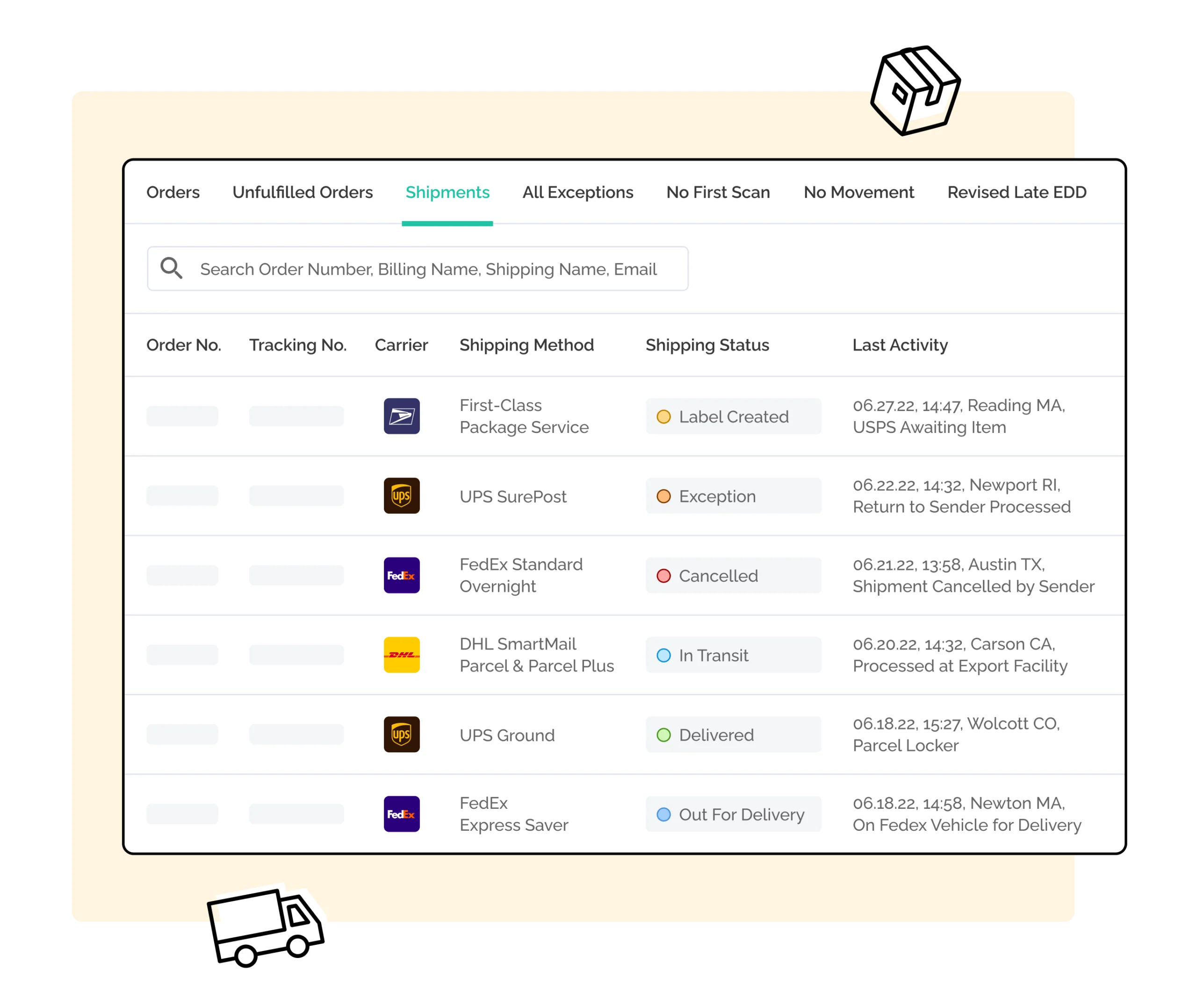
Things like weather, carrier issues, or lost packages happen but you can stay ahead.
Identify delayed or undeliverable shipments in real time.
Proactively notify customers via email or SMS.
Turn potential frustration into confidence and trust.
👉 Instead of negative reviews, you earn loyalty.

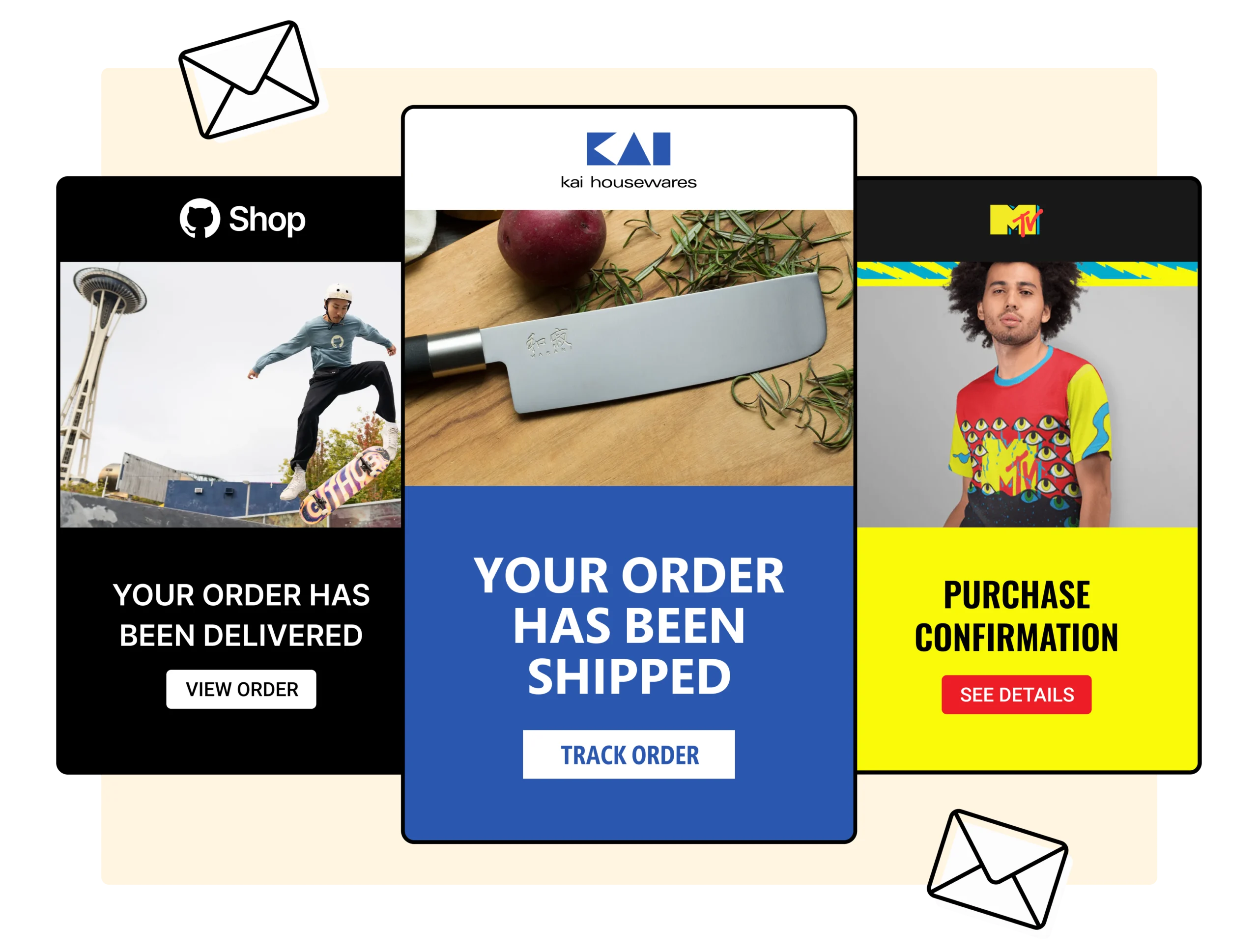
No more sending individual emails or manual updates.
Send bulk notifications about orders, delays, or backorders.
Keep customers informed automatically personalized and branded.
Cut customer support time in half while improving satisfaction.
👉 A TMS moves freight; WeSupply moves communication.
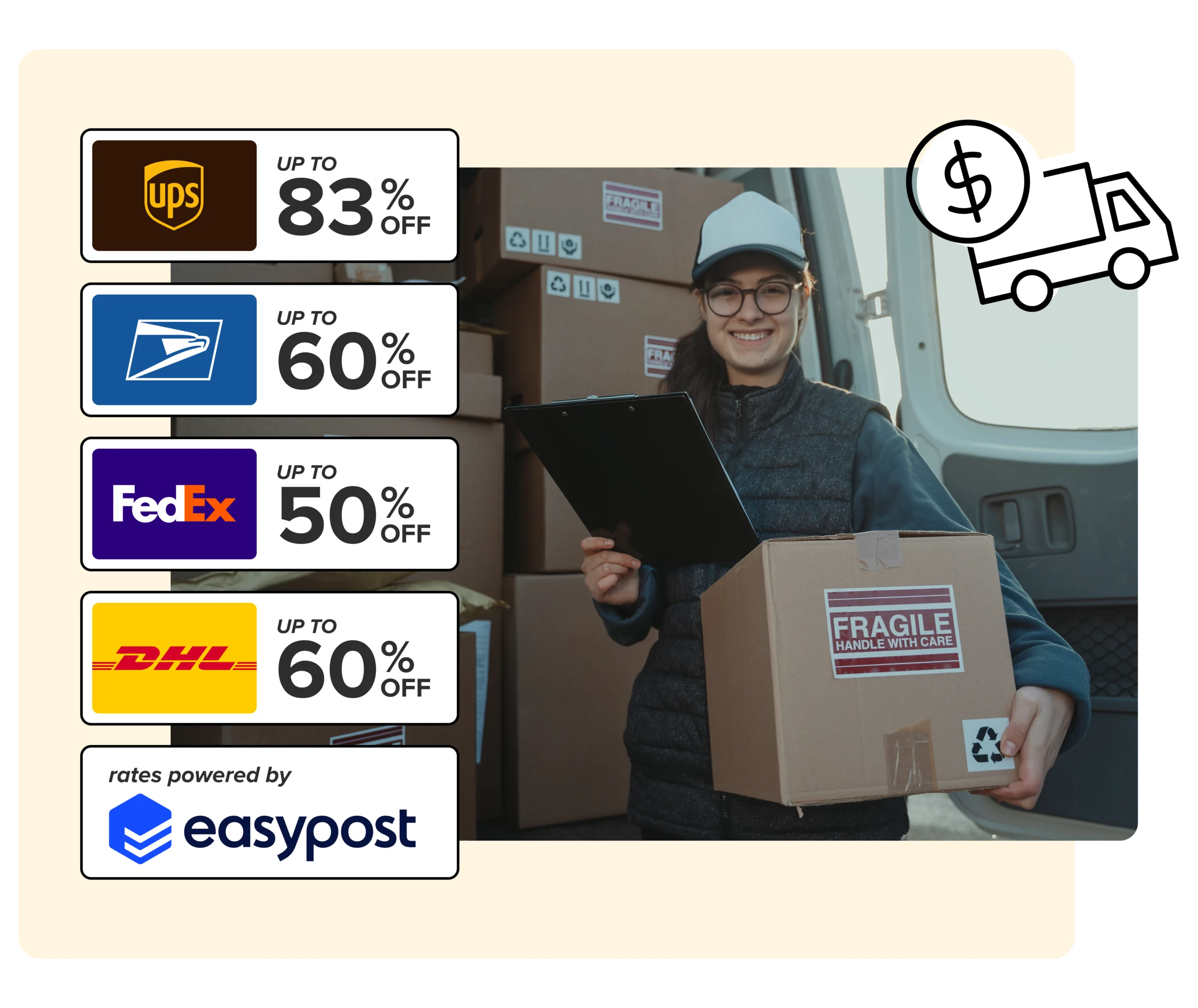
WeSupply connects directly with EasyPost’s Luma to make shipping smarter and cheaper.
Compare real-time rates from top carriers in one view.
Save up to 83% on shipping costs with discounted labels.
Print labels instantly, no copy-paste, no errors.
👉 Your shipping costs drop while your efficiency skyrockets.
Lost or stolen packages can ruin trust WeSupply helps fix that fast.
Let customers report lost packages directly on your branded tracking page.
Resolve claims quickly with live updates and re-ship options.
Provide peace of mind with built-in shipping insurance.
👉 Your customers feel cared for even when things go wrong.
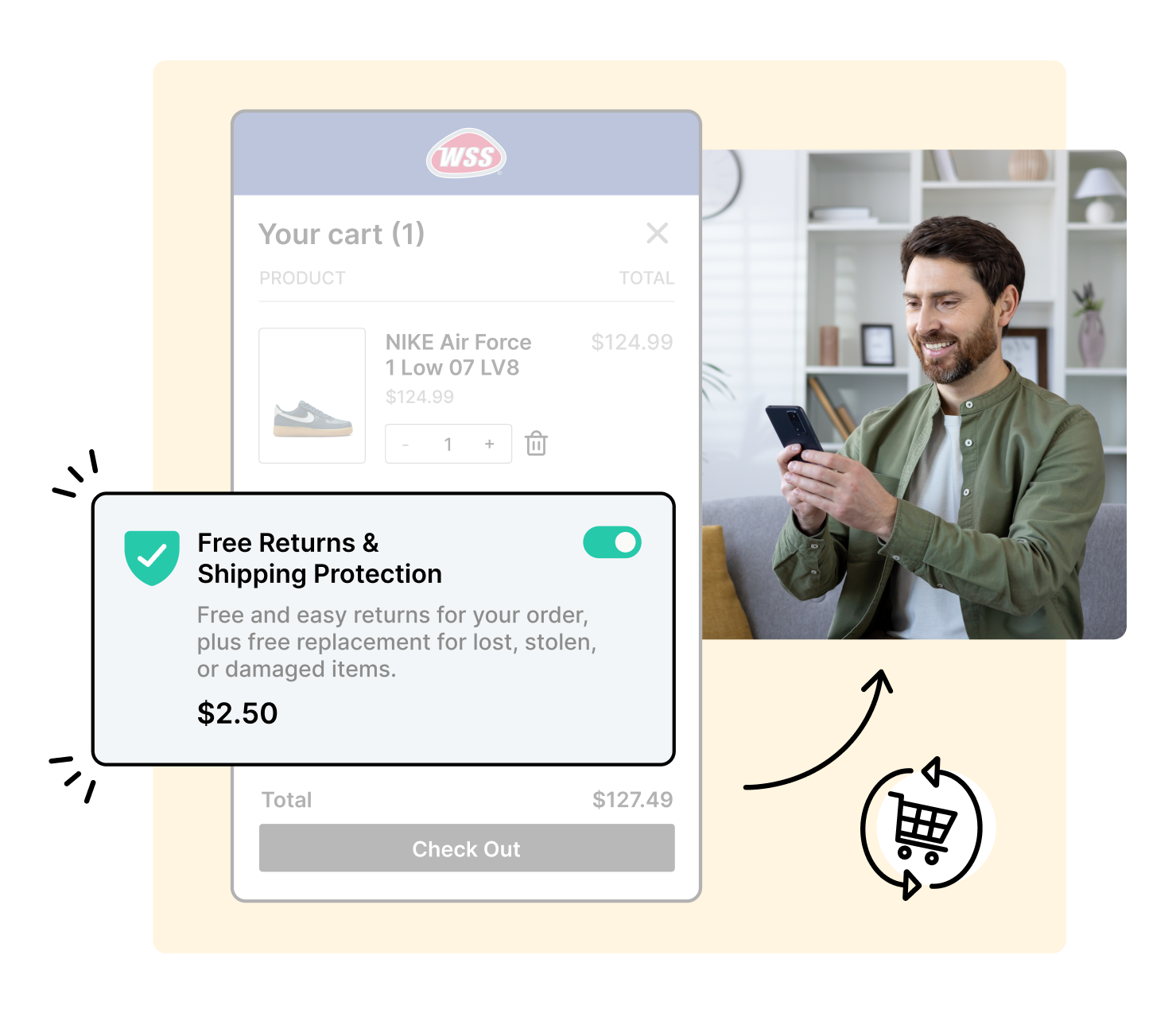
A TMS helps you plan the journey. WeSupply helps you deliver it perfectly.
Together, they give you:
End-to-end visibility, from warehouse to doorstep.
Automated updates that keep your customers in the loop.
Lower operational costs and higher customer satisfaction.
A smarter, scalable shipping experience ready to grow with your business.
Your TMS is the brain behind your logistics but WeSupply is the heart that keeps your customers happy.
By connecting planning and delivery in one seamless experience, WeSupply helps you turn ordinary shipping into a competitive advantage.
💬 Ready to see how WeSupply can enhance your TMS? Schedule a free demo today and start improving your shipping experience as soon as tomorrow.
A Transportation Management System is more than software it’s the backbone of a smooth, cost-effective shipping operation.
When paired with WeSupply, it becomes a complete solution that not only plans shipments but delivers real-time visibility, proactive communication, and effortless customer satisfaction. With WeSupply’s integration to over 1,000 carriers, AI-powered discounted labels, and branded tracking updates, shippers gain control over every step from order to doorstep. Delays are managed before they escalate, WISMO calls drop, and customers stay informed and loyal. By combining your TMS with WeSupply’s shipment tracking, automated notifications, and intelligent shipping tools, you don’t just manage logistics you elevate them.
The result? Lower costs, faster deliveries, happier customers, and a competitive edge that helps your business grow confidently in today’s fast-paced shipping world.
Returns Analytics for eCommerce Business
Book a quick call with our experts to see how WeSupply can help you understand why your customers are returning: Identify the most returned products, Understand why those products are returned, Identify which customers are serial returners, Reduce Return Rate with Actionable Insights, Returns data available in BigQuery.
1. What are the most important features of a modern TMS?
Top features include route optimization, real-time tracking, freight auditing, analytics dashboards, and integrations with ERP or WMS systems for full supply-chain visibility.
2. Can small and medium businesses benefit from a TMS?
Yes. Cloud-based TMS solutions offer affordable, scalable options that automate shipping, reduce manual work, and provide real-time visibility ideal for growing SMBs.
3. How does a TMS improve customer satisfaction?
By ensuring faster, more reliable deliveries and providing real-time shipment tracking, a TMS reduces delays, boosts transparency, and enhances customer trust and loyalty.
4. How does WeSupply enhance my existing TMS?
WeSupply complements any TMS by adding real-time shipment visibility, proactive customer notifications, and branded tracking bridging the gap between logistics planning and post-purchase experience.
5. Can WeSupply help reduce customer service workload?
Yes. WeSupply automates “Where Is My Order?” updates via SMS or email, cutting WISMO calls by up to 50% and freeing support teams to focus on higher-value tasks.
6. Why choose WeSupply for post-purchase visibility?
WeSupply connects with 1,000+ carriers, provides predictive delay alerts, discounted shipping labels, and built-in lost-package resolution helping businesses deliver transparency, trust, and loyalty at scale.
7. Does WeSupply have an Official Shopify App?
Yes. WeSupply has an Official Shopify App. You can download it and start integrating with your Shopify Store.
8. Does WeSupply have an official Magento extension?
Yes, WeSupply has an official extension for Magento. The WeSupply x Magento integration allows for automating order tracking experiences, reducing customer inquiries, automating shipping email and SMS notifications, and providing a fully branded order tracking experience
9. Does WeSupply have an official BigCommerce App?
Yes, WeSupply has an official BigCommerce App. You can integrate WeSupply with your BigCommerce store to improve your post-purchase customer experience.
Learn How To Create Successful Post Purchase Email Campaigns
Build an effective post-purchase email flow that helps you increase customer satisfaction and drive revenue growth!
For example, when dispatch or booking tasks are automated, labor costs drop. The TMS can automatically send transport orders, update status, etc. Some of these automations can reduce waiting or delay times combined with improved docking times.
Boost your sales this peak season with effective strategies for personalized shopping. Practical tips to enhance customer engagement!

Discover effective post-purchase engagement strategies to enhance customer loyalty and keep your audience coming back.

Discover key insights into ecommerce post-purchase behavior to enhance customer loyalty. Read the article for effective strategies!
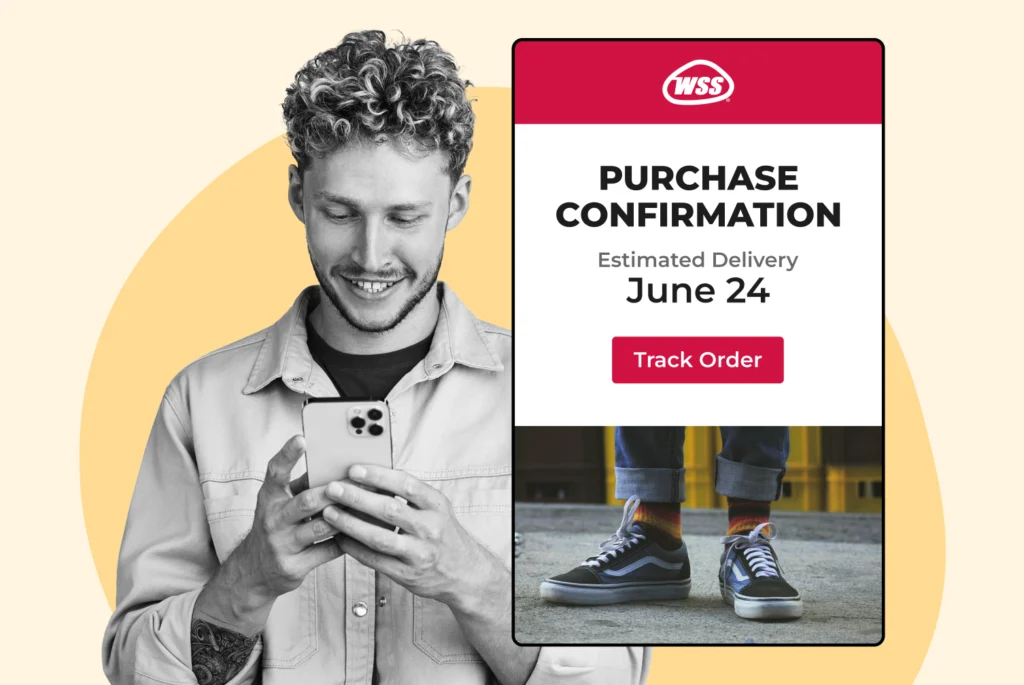
Learn how delivery date transparency can boost conversions during peak season. Discover tips to enhance customer trust and drive sales.

Enhance delivery efficiency with proven strategies to optimize real-time ETAs. Discover actionable tips for accuracy and reliability.

Navigate Black Friday returns with ease! Discover practical tips for hassle-free exchanges and make your post-shopping experience stress-free.

Navigate U.S. customs compliance with key strategies for successful shipping. Enhance your processes and avoid costly delays

Learn effective strategies to handle the holiday returns rush with ease. Get ready to streamline your process and minimize stress.

Prepare for the holiday returns rush with essential strategies to streamline your process and enhance customer satisfaction.